 English,
 Spanish,
 Polish,


Free Consultation
630-932-9100

-

- Home
- Our Firm
- Practice Areas
- Divorce
- Alimony and Maintenance
- Child Support
- College Expenses
- Special Needs Children and Divorce
- Parental Responsibility / Custody
- Sole Custody vs. Joint Custody
- Parenting Plans and Visitation
- Child Relocation
- Property and Asset Division
- Retirement, 401k Accounts and Pensions
- Debt Division
- Post Decree Modifications
- Post Decree Enforcement and Contempt Hearings
- Dissolution of Arranged Marriages
- Tax Consequences and Divorce
- Uncontested Divorce
- Divorce Involving Mental Health Issues or Addictions
- Divorce and the Stay-at-Home Parent
- Divorce FAQs
- Family Law
- Personal Injury
- Motor Vehicle Accidents
- Auto Accidents
- Truck Accidents
- Amazon Delivery Driver Accidents
- Motorcycle Accidents
- Rideshare Accidents
- Pedestrian Accidents
- E-Bike/E-Scooter Accidents
- Boat Accidents
- Aviation Accidents
- Premises Liability
- Medical Malpractice
- Nursing Home Abuse
- Wrongful Death
- Construction Site Accidents
- Other Serious Injuries
- Personal Injury FAQs
- Workers' Compensation
- Construction Accidents and Injuries
- Warehouse and Factory Worker Injuries
- Healthcare Worker Injuries
- Office Worker Injuries
- Shipping and Trucker Worker Injuries
- Types of Workers' Compensation Injuries
- Back and Neck injuries
- Repetitive Stress Injuries
- Arm and Shoulder Injuries
- Knee Injuries
- Occupational Diseases
- Specific Accident Cases
- Who We Represent
- Workers' Comp Death Benefits
- Filing a Workers' Comp Claim
- How to Qualify for Benefits Under Workers' Comp
- Vocational Rehabilitation Rights
- Workers' Compensation FAQs
- Criminal Defense
- Immigration
- Bankruptcy
- Estate Planning
- Real Estate
- Divorce
- Success Stories
- Testimonials
- Media
- Blog
- Contact Us
Recent Blog Posts
Study Reveals That Children in Shared Custody Situation Are Less Stressed than Children in a One-Parent Home
 When determining what would be the best for your children when you and your spouse have decided to split, there are a variety of child custody arrangements that can be discussed and put into place. Many psychologists have wondered about the effect that custody arrangements could have on children that are forced into the custody arrangement, especially determining whether one custody arrangement may be in the best interest of the child.
The Custody Arrangement-Stress Study
According to a most recent study, surprisingly, the once-held idea that shared custody arrangements were more stressful for children actually is not the case at all. As found in the study, where 150,000 children ages 12-15 years old were evaluated, it is the children who are in a one-parent home that suffer the most. The researchers met with children who lived in nuclear families, those that spent time in a shared custody relationship with their parents, and then children who lived in one-parent homes, and evaluated their psychosomatic health problems, including everything from sleep issues, stomachaches, tension, loss of appetite, or any issues concentrating.
A Change for Potential H2B Visa Applicants
 In the U.S., there are visa categories offered to cover almost any possible situation, from permanent residence to visiting for a short time. Somewhere in the middle is the H2B visa, which is used for temporary non-agricultural workers. Illinois plays host to a fair number of H2B holders, boasting one of the highest populations of day and short-term laborers in the country. However, a recent court ruling puts the availability of H2B visas for the near future into flux.
H2B Visa Jobs Matter
H2B visas are granted to those who meet requirements and can fill temporary, non-agricultural, unskilled jobs. Examples of these include chefs, landscapers, seasonal workers on fishing boats, and other hospitality workers. While these jobs may seem inconsequential, they are in fact the backbone of several industries. Problems in the flow of these visas can significantly cripple commerce.
Employers apply for H2B visas to provide to applicants. To succeed, they must show:
Pet Custody Battles: How to Keep Fido in Your Home
 Divorce can affect an entire household and the family and friends who surround it. When a divorce is first announced and the process is started, the first things that come to the surface are the most obvious: What to do with the assets, the house, and the children? Though these are all major concerns, there are other concerns that are just as important but sometimes are forgotten in the minutiae. These days, attorneys are seeing an increase in pet custody cases within the last 5 years. According to a study done by the American Academy of Matrimonial Lawyers (AAML), 88 percent of pet disputes are over the family dog; only five percent of pet disputes are over the family cat.
Pets as Property In the Eyes of the Law
Pet custody battles can cause considerable controversy within the divorce because the emotional attachment that people have with the beloved family dog or cat. The family pet, though many would disagree, is not treated equally as the children are when it comes to the law. For example, pets are not considered as members of the household. They are more akin to furniture or other tangible, personal property in the eyes of the law. Because of this, the status of the pet as either marital property or individual property is a crucial consideration.
Conditional Green Cards: Moving Up in the World
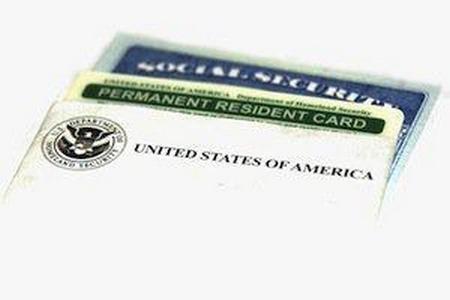 It is often believed that if a foreign national marries a U.S. citizen, or if he or she establishes a business in the country, that any green card application he or she makes will automatically be approved with no strings. This is not the case, nor has it been the case in recent years, for everyone.
While some marriage-based green cards are approved with little difficulty, some are only granted with conditions attached. If you are faced with this situation, it is imperative to know what a conditional green card is, and what it is not.
The Initial Conditional Card
Generally, a card granting lawful permanent resident (LPR) status, or a “green card,” is granted with conditions when an immigration official suspects that a marriage (or a business, in the rare case of entrepreneurs) is a sham.
Between 2007 and 2009, over 600 marriages were found to be fraudulent, which is a significant increase from past figures. In response, United States Citizenship and Immigration Services (USCIS) has turned up the proverbial heat, and a conditional green card is a way to do it. It allows a sort of testing period to see if a marriage is truthful and legal.
For example, consider a situation in which a U.S. citizen legally marries a national of Mexico. This is a common scenario for foreign nationals to obtain a green card, which entitles them to live and work in the United States. Many such marriages pass muster immediately. For those that do not, the foreign national may be granted a green card on a ‘conditional’ basis. Hence, a green card will be granted, with all the benefits and responsibilities of an unconditional card; but, at the end of two years, the person must be in a position to apply to remove the conditions and pass the test. During the two years in the meantime, the couple will be monitored, though not invasively, to help prove their marriage is genuine. If fraud is discovered at any time, the foreign national can be detained or deported.
Removing the Conditions
When the two-year period is nearing its end, the foreign national spouse must be able to meet certain requirements in order to apply for the conditions on his or her LPR status to be removed. The spouse must meet one of four criteria:
Breach of Promise Act: What Happens to the Ring in a Broken Engagement
Getting ready for a wedding can be exciting; you and your betrothed pick out an engagement ring, you determine the venue, band or DJ, the invitations, who will be the flower girl, etc. The preparations can be extremely costly…especially if the wedding does not take place. Once the heartbreak and anger subside in the aftermath of a broken engagement, one question remains: who gets the engagement ring?
This goes beyond an etiquette lesson as the lesson does not mirror what the law may require as a result of the end of an engagement. Of course, many would assume the ring should be returned to the fiance who proposed. The process in Illinois, however, depends largely on who broke up with whom, and other factually-based assessments.
Breach of Promise Act: Illinois
This issue in Illinois is governed by the Breach of Promise Act, which determines the enforcement rights and legally available claims that can be brought into court due to the breach of promise to marry. Though Illinois, and states nationwide, cannot force the performance of one of the parties into marriage, it can create a responsibility that must be held by the breaching party as a result of not following through with the engagement.
What is the Diversity Visa Lottery?
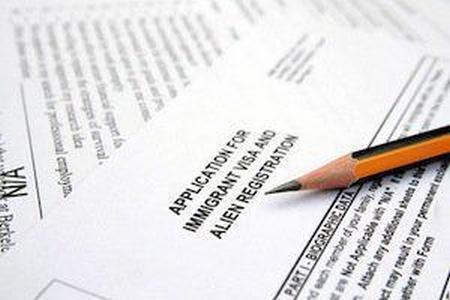 There are several myths surrounding the diversity visa lottery, and people may be turned off from applying for it because they do not know the full story. However, the diversity visa lottery gives many a chance to immigrate to the United States when they might otherwise not have the chance.
The Facts
Section 203(c) of the Immigration and Nationality Act allows for the creation of a class known as ‘diversity’ immigrants, who must come from countries with historically low U.S. immigration rates. This disqualifies many of the most populous countries on earth, such as China, India and Mexico. Diversity visas (DVs) are given out in six different delineated regions, but a country may not receive more than 7 percent of the total for any given fiscal year.
There is no cost to enter the DV lottery, but an entry does signify interest in immigrating to the United States. As such, if you are denied and then later apply for a nonimmigrant visa in a different context, a consul may factor that into consideration. If people applying for nonimmigrant visas show too few ties to their home countries or too much interest in remaining in the U.S., their application may be denied.
Potential Issues
There have been numerous issues with the DV program since its inception, and various lawmakers openly advocate for its discontinuation. Reasons given for this include a tendency toward bureaucratic tangles and even security dangers and outright fraud, with some pointing to the case of Hesham Mohamed Hadayet, who killed two and wounded four in a 2002 shooting in Los Angeles as proof that DV application standards are too lax.
In 2007 and 2009, lawmakers introduced bills to eliminate the DV program entirely, but neither passed. They did, however, highlight inefficiencies in the program, most notably that there was no way (until the last few years) to check the status of an application.
After DV-2010, a system was introduced to provide confirmation numbers but the system routinely failed and provided nothing. Also, U.S. authorities have done little or nothing during the life of the program to try and crack down on scams and fraudsters who claim that for a fee, they can get someone a diversity visa. Not unlike notarios who prey on undocumented immigrants, DV fraudsters routinely try to extort or lie to applicants to either get money or to scare a winning applicant away from pressing his or her green card claim.
Perhaps the most long-lasting objection to the DV program as it currently operates is made by immigrants who have come to the U.S. under color of other visas, such as H1Bs. People in these situations allege that the diversity program is simply unfair—it hands permanent resident status to people who have not completed any of the time-consuming and difficult steps to obtain legal status in the U.S. beforehand, while long-term visa holders who work and pay taxes in the country may find themselves in legal limbo.
Contact an Immigration Attorney
If you have entered the diversity visa lottery for the next available fiscal year, or if you have been lucky enough to win a place, talking to a competent immigration attorney may be beneficial. The passionate Chicagoland immigration attorneys at Mevorah & Giglio Law Offices are experienced, knowledgeable, and compassionate, and willing to do their best to help you. Contact us for a free consultation.
Five Ways Illinois Couples Can Adopt Children
 For many Illinois couples, adoption is the right way to add a child to their family. This decision is often an emotional one and changes not only the adoptive parents' lives, but the life of the adopted child and any of the parents' other children as well.
Adopting a child is a complicated process. There are multiple routes parents can take to adopt a child, each with its own unique challenges and benefits. If you and your spouse are considering adopting a child, talk about these different routes and your thoughts about each one. For some couples, adopting a child from their country of origin is a priority. For others, adopting a child from a relative or family friend and allowing the child to maintain a relationship with his or her birth mother as he or she grows up is the best choice.
In Illinois, adoptions are regulated by the laws included in the Illinois Adoption Act. It is also important to note that although many adoptive parents are married or in committed relationships, this is not a legal requirement. You may adopt a child as a single parent in Illinois.
The Employment Rights of Undocumented Workers
 Undocumented immigrants have enough difficulty finding work, but when accidents happen, they are sometimes faced with difficult choices. Many undocumented workers have not advised their superiors of their status—but to have a chance at obtaining workers’ compensation, they may have to do so, and even then, they will likely be denied. If you are undocumented and have been injured, it is important that you fully understand your situation and act accordingly.
A Pattern of Mistreatment
Most people are under the impression that undocumented workers are not entitled to any kind of protection under United States’ employment laws. However, while the undocumented have no legal right to employment itself, once they have obtained it they are covered by many of the same regulations as documented immigrant and citizen workers. Laws like the Fair Labor Standards Act (FLSA) do not specifically exclude the undocumented from their protections, which means that they do still apply.
However, there is a pervasive trend of employers willfully denying those rights to undocumented workers, often to the degree that it becomes abusive. While undocumented workers are often rightly let go after their Social Security numbers cannot be verified, many are let go even before that point, and a case can be made that it is often because of protesting unsafe or unjust working conditions. Some of the occurrences that undocumented workers most often report facing include:
Lawyers Challenge Joliet Cops to Charity Softball Game
JOLIET – Usually cops and lawyers play hardball.
But the Barristers and Counsel of Will County have challenged members of the Naperville Police Department to play a 12-inch softball game this summer, with proceeds from ticket sales going to local charities.
“We sometimes go at each other in the courtroom so now we’ll go for some bragging rights,” attorney Greg Reeder said Wednesday after serving Naperville Police Chief Brian Benton with a subpoena for the game that does not appear to be legally binding.
But Benton agreed to ask officers to volunteer for the game, which will be held at noon July 25 at Silver Cross Field.
“Your failure to appear in response to this subpoena will subject you to punishment and eternal embarrassment for contempt of ... charity,” the document read.
“We have a very athletic department here, especially when there’s a charity involved, a lot of [officers] step up ... whether it’s golf or softball,” Benton said.
Talking to Children about Divorce
 If you have recently made the decision to end your marriage, your child has undoubtedly picked up on the feelings of tension and imminent change between you and your spouse. If you are currently going through the divorce process or even if you have been divorced for years, your child might still have questions about the process and what the divorce meant for your family. This is where it is crucial for you to maintain open lines of communication with your child and answer him or her in a truthful, yet age-appropriate way – by lying to your child or otherwise attempting to distort or withhold the truth, you are only alienating him or her and setting the example that he or she cannot come to you with serious questions.
Getting the conversation about your divorce started with your child can be very difficult. You might not know where to begin or what is appropriate to share with him or her. When the time comes to start having this series of discussions with your child, keep the following in mind:








Offices in 3 Convenient DuPage County Locations
Lombard
900 E. Roosevelt Road
Lombard, IL 60148
Phone: 630-932-9100
Fax: 630-932-9868
MAP & DIRECTIONS
Bloomingdale
134 N. Bloomingdale Road
Bloomingdale, IL 60108
Phone: 630-529-2400
Fax: 630-529-7630
MAP & DIRECTIONS
Naperville
Phone: 630-420-1000
By Appointment Only

 Make a Payment


